
Brick Out - Shoot the ball
Puzzle1StudioPuzzle
4.514.67K Reviews
- Version
- 2617.1.1
- Installs
- 10.00M
- Age Rating
- Everyone
Screenshots
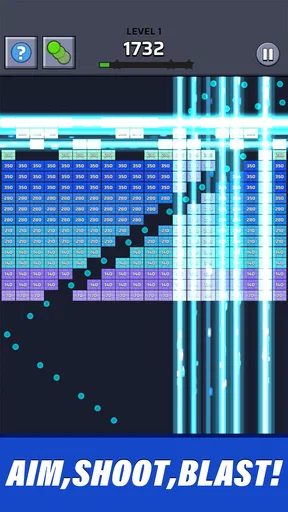
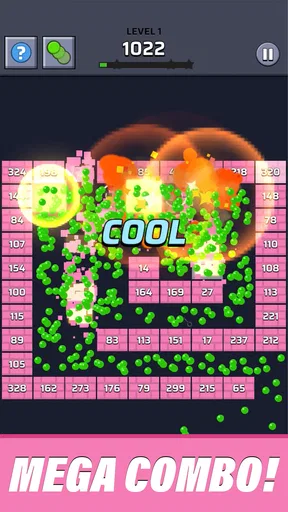
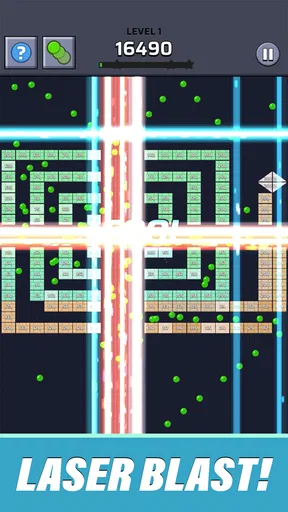
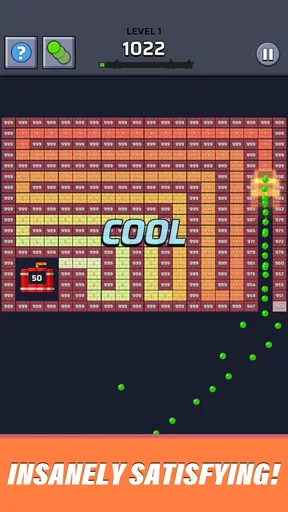
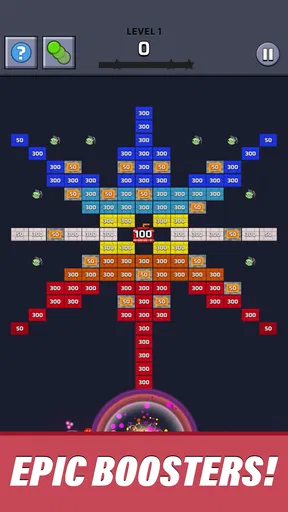
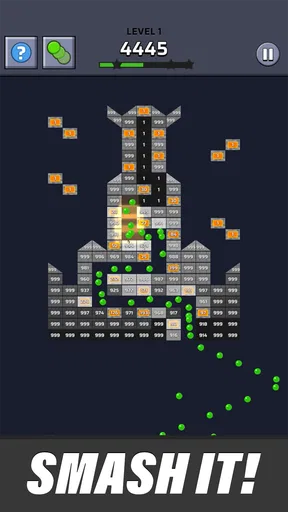
Our Review of Brick Out - Shoot the ball
 Analysis by Appyee
I spent time with Brick Out - Shoot the ball as a quick, touch-friendly puzzle game, and its appeal became clear almost immediately: it is easy to start, but the best results come from making small decisions before releasing a shot. The basic idea is familiar—aim balls at brick formations and clear them—but the satisfying part is choosing angles, planning rebounds, and turning one launch into a chain of useful hits.
That makes this a good fit for short breaks rather than a game I would play for a long story or a deep campaign. It is free to download, aimed at Everyone, and developed by Puzzle1Studio. The game has reached over ten million installs and holds a 4.5 average from around one hundred thousand ratings, which matches my impression of it as a broadly accessible casual puzzle experience rather than a niche challenge title.
How the basic workflow feels in real play
A typical round starts with a group of bricks arranged above the launcher. I drag to set the direction, check where the first ball should make contact, and release. The balls then bounce through the formation, damaging or removing bricks before returning to the bottom. The next turn is about reading what changed, collecting any useful additions, and finding a safer or more productive angle.
The first lesson is that the most obvious target is not always the best target. A brick directly in front of the launcher may be easy to hit, but a shallow angle toward a side wall can send balls across several rows. I found myself paying more attention to the second and third bounce than to the opening impact. That habit makes the game feel more thoughtful than a simple aim-and-fire toy.
There is also a practical rhythm to each turn. I do not rush the release. I move the aiming line slowly, look for a path that reaches several bricks, and then consider where the balls will return. A shot that clears one troublesome brick but leaves the rest of the board awkward can be worse than a slightly less powerful-looking shot that improves the next turn.
This is where the game works well as a waiting-room or commute companion. A round can be approached in small pieces, and the controls do not require a complicated setup. I can play with one hand when necessary, although careful aiming is easier when I have a stable grip and enough screen space to see the full route.
New players should expect the early sessions to be about learning angles, not memorizing a fixed solution. Brick layouts may look similar in principle, but the useful line changes as the board develops. I recommend watching the full travel of the balls instead of tapping again immediately. That pause reveals which rebounds were productive and which ones merely scattered the shot.
One of the most useful everyday habits is to treat the lowest dangerous brick as a priority. If bricks advance toward the launcher, clearing a high-value cluster is not always enough if a low brick remains in a bad position. I often choose a line that removes the immediate threat first, then use the remaining balls to create wider damage. It is a modest change, but it prevents many avoidable failures.
Settings and small adjustments worth checking
Before settling into regular play, I would check the available in-game settings rather than assuming the default arrangement is ideal. Casual puzzle games are often used in noisy places, at night, or during short pauses, so sound and notification-related choices can affect whether the experience feels convenient. I avoid changing anything repeatedly during a round; it is better to set up the game once and keep attention on the board.
I also recommend checking whether the current version behaves comfortably on your device before committing to long sessions. The listed current version is 2617.1.1 and the game requires Android 6.0 or later. That makes it accessible to many older Android phones, but comfort still depends on screen size, touch response, and how clearly the aiming path is displayed on your particular device.
There is a useful distinction between a setting that changes presentation and one that changes how you play. Turning down sound can make the game easier to use in public, but it will not improve your score. By contrast, adjusting your hand position, increasing screen brightness when the aiming line is difficult to follow, or playing in a stable orientation can directly reduce missed releases.
I would not expect settings to transform this into a deeper strategy game. The core challenge remains the same: aim, bounce, clear, and respond to the new layout. That is a strength for people who want consistency, but it also means anyone searching for extensive customization may find the options modest compared with larger puzzle games.
Because the game is free, it is sensible to start without spending anything and learn the basic loop first. In-app purchases range from $0.99 to $99.99 per item, so I would treat purchases as optional conveniences rather than part of the essential entry cost. My advice is to decide in advance whether this is a no-spend time-killer for you. That simple boundary keeps a relaxed round from turning into an unplanned purchase decision.
Faster patterns that improve ordinary rounds
The fastest improvement I noticed came from stopping the search for the perfect first impact. Instead, I look for a route that offers several useful contacts. A ball that hits a brick and then reaches a wall can be more valuable than one that strikes a single large target head-on. Side-wall rebounds are especially useful when the formation leaves narrow channels.
Another repeatable pattern is to aim just beside a cluster rather than directly into its center. The first ball enters at an angle, while later balls follow slightly different paths because the formation is changing. This can open a corridor through the bricks and create more opportunities than a straight central shot. It is not universally correct, but it is a strong starting point when the board looks dense.
I also try to preserve a useful return path. If the balls finish in a scattered pattern, the next launch may be harder to judge. When possible, I choose an angle that sends them back toward a predictable area of the bottom edge. This does not guarantee a better turn, but it reduces the number of rushed adjustments between shots.
Experienced play is less about moving the aiming line quickly and more about reducing wasted launches. Before releasing, I ask three simple questions: what brick is closest to causing trouble, which wall gives the best rebound, and where are the balls likely to return? These questions take only a moment, yet they make the game feel far more controlled.
A useful scenario is playing during a short break at work or while waiting for a bus. I do not try to force a record in that situation. I choose a conservative angle, clear the most immediate threat, and stop after a natural turn if I need to put the phone away. The game suits that style because it does not demand a long narrative session, but the same short-session design can feel repetitive if you want constant novelty.
When the board becomes crowded, I avoid spending the entire turn on one stubborn brick unless it blocks a valuable route. Clearing several weaker bricks can create better geometry for the following launch. This is one of the main trade-offs in the game: immediate damage feels rewarding, but board shape often matters more than the number of bricks removed at once.
I found it helpful to remember that a low-angle shot is not automatically a safe shot. It may travel along the bottom and return with limited coverage, leaving the upper formation mostly untouched. A slightly steeper line can look less dramatic but reach more of the board. The right choice depends on the current arrangement, so fixed aiming formulas are less useful than learning to read the available space.
Where the simple design reaches its limits
The same simplicity that makes the game approachable also defines its weaknesses. It does not offer the kind of character development, story progression, or tactical variety I would expect from a larger puzzle adventure. If your ideal game includes many distinct modes, elaborate objectives, or a strong sense of discovery, this may feel narrow after the initial attraction wears off.
Repetition is the main limitation for me. The pleasure comes from improving a shot and watching a clean chain of rebounds, but that pleasure depends on enjoying the central mechanic. Players who dislike repeating similar aiming decisions will probably reach the limit quickly. I would choose a match-three game instead if I wanted more frequent special effects, changing piece abilities, or a stronger sense of visual variety.
There is also a real difference between casual success and mastery. You can clear many boards by pointing toward obvious openings, but consistent play requires patience and spatial prediction. The game does not remove that learning curve with complicated rules; it simply makes the consequences of each angle visible. That is satisfying for some players and unforgiving for others.
Touch controls can introduce friction. A small movement of the finger may change the line more than expected, especially on a compact display or when playing while walking. I would not recommend using it during any situation that needs your full attention. For the best experience, sit still, keep the phone steady, and release only after the line looks intentional.
The free model is another consideration. The game can be approached without paying, but the presence of in-app purchases means I would be cautious when handing the device to a child, even though the content rating is Everyone. The age rating describes the game’s general suitability, not a guarantee that every purchasing situation will be effortless. A quick check of the device’s purchase controls is a sensible part of setting it up for younger players.
Compared with a traditional brick-breaker, this game feels less like controlling a paddle in real time and more like solving a turn-based geometry problem. That makes it calmer and more deliberate. Compared with a standard match-three puzzle, it gives me more control over the outcome of each move, but fewer kinds of interaction. I would pick this when I want to think about angles; I would pick the match-three alternative when I want rapid matching and frequent board transformations.
It is also not the right choice for someone seeking a competitive multiplayer experience. The appeal here is personal improvement and the satisfaction of a well-planned launch, not direct competition with another player in the same moment. That distinction matters because the store summary may sound energetic, while the actual experience is mostly quiet concentration between releases.
Who will get the most from it
I think the strongest audience is anyone who enjoys compact physics puzzles and wants a game that can be understood within minutes. It works for casual players, older Android users whose phones meet the minimum requirement, and people who prefer sessions built around individual decisions rather than long missions. The Everyone rating also makes it a reasonable family-friendly option, provided purchases are handled appropriately.
It is particularly good for players who like improving through habits. You can begin by aiming at whatever looks closest, then gradually learn to use walls, protect the lower area, and plan the return path. Those improvements are small but tangible. I enjoyed that the game rewards better observation without requiring a tutorial-heavy system.
I would skip it if you need a strong narrative, a large collection of distinct puzzles, or a clear endpoint that arrives quickly. I would also skip it if repetitive ball trajectories become irritating after a few sessions. The free download lowers the barrier to trying it, so the best test is simple: play long enough to see whether planning the next rebound feels satisfying rather than routine.
For a parent or shared-device owner, the straightforward controls are an advantage, while the optional purchase range is the main thing to manage. For a commuter, the short-turn format is convenient, but a stable grip is important. For a puzzle enthusiast, the angle-based play offers enough room for deliberate improvement, though probably not enough variety to replace a larger puzzle collection.
My verdict after learning its rhythm
Brick Out - Shoot the ball is a focused puzzle game that succeeds because its central action is immediately understandable and gradually more interesting than it first appears. Puzzle1Studio keeps the experience centered on aiming, rebounds, and board management. I liked that a better result usually came from thinking one bounce ahead rather than simply tapping faster.
The game’s best feature is the repeatable workflow: inspect the formation, identify the urgent brick, find a wall-assisted route, and release with a plan for the return. That routine gives experienced users a practical way to improve without pretending there are secret systems to uncover. It also makes the game easy to pick up again after a break.
Its limits are equally clear. The format can become repetitive, customization is not the reason to install it, and players looking for story, multiplayer, or broad puzzle variety should choose something else. The optional purchases also deserve a little attention, especially on a shared device.
Still, as a free casual game for Android 6.0 or later, it earns a recommendation from me for the right audience. The listed release date is December 6, 2019, and the continued version updates show a game that remains available in a familiar, compact form. If you enjoy turning simple angles into reliable clearing patterns, this is an easy game to keep around for short breaks. I would install it for quick spatial challenges, play without spending at first, and judge its long-term value by one question: do those careful rebounds still feel rewarding after the novelty fades?
Verdict
Strengths of Brick Out - Shoot the ball
- Simple one-touch controls are easy to learn and use.
- Short levels make it suitable for quick gaming sessions.
- Brick-breaking gameplay works well without an internet connection.
- Power-ups add variety and help clear difficult arrangements.
- Bright visuals and sound effects make hits feel satisfying.
Limitations of Brick Out - Shoot the ball
- Later stages can become repetitive after extended play.
- Some power-ups depend heavily on luck rather than strategy.
- Frequent ads may interrupt the flow between levels.
- Precision aiming can feel awkward on smaller phone screens.
- Difficulty spikes may frustrate players looking for a relaxed game.
Other Releases by Puzzle1Studio
View All
Bubble Pop Origin! Puzzle Game
Puzzle4.7

Word Tiles: Relax n Refresh
Word4.6
Similar Picks in This Category
View All
Block Blast!
HungryStudio4.8

Braindom: Brain Games Test
Lahana Game Studio4.6

AMAZE!
CrazyLabs LTD4.6

Sudoku - Classic Sudoku Puzzle
Oakever Games4.7

Art Puzzle - Puzzle Games
Easybrain4.8

Amaze GO!
Oakever Games4.9
Frequently Asked Questions
What is Brick Out - Shoot the Ball?
Brick Out - Shoot the Ball is a casual arcade game based on the classic brick-breaker formula. You aim and launch balls at numbered blocks, trying to clear them before they reach the bottom of the screen. Each round combines simple controls with light strategy, since the angle of your shot, the number of balls available, and the position of special blocks can greatly affect your result.
How do you play Brick Out - Shoot the Ball?
Gameplay is easy to understand, even for first-time players. Drag your finger across the screen to adjust the shooting angle, then release to fire the balls toward the bricks. The balls bounce automatically from walls and blocks, while each brick usually requires a certain number of hits. Collecting extra balls and choosing angles that create multiple rebounds are important for clearing difficult formations.
Is Brick Out - Shoot the Ball free to download and play?
Brick Out - Shoot the Ball is generally available as a free download, allowing users to start playing without paying upfront. However, the experience may include advertising and optional in-app purchases, depending on the platform and version installed. These purchases may offer advantages such as removing ads, unlocking content, or providing additional resources, so checking the store listing is recommended before downloading.
Does Brick Out - Shoot the Ball require an internet connection?
The core brick-breaking gameplay can usually be enjoyed without a constant internet connection, which makes the game suitable for short sessions while traveling or when mobile data is unavailable. Nevertheless, an internet connection may be needed for advertisements, certain rewards, cloud-related features, updates, or purchases. Availability of offline functionality can vary between versions, so players should verify the current store information.
Is Brick Out - Shoot the Ball suitable for children and casual players?
The game is designed to be accessible to a broad audience because it uses straightforward controls, short levels, and uncomplicated arcade mechanics. It can be a good choice for children and casual players, although adults may also enjoy the increasingly challenging puzzles. Parents should still review the app’s age rating, advertising behavior, and optional purchases, particularly if children will use the device independently.
Play our best games!


